

BASIC Reference 011
Warehouse for rent for a logistics company
Protection class 3 | condensation-protected. A logistics service provider from southern Germany wanted to expand its warehouse space. One thing was particularly important to the customer: he wanted to remain flexible in terms of space and a short-term realisation was important to him. The company therefore decided in favour of a BASIC temporary building for rent.
The 2,250 m² double-bayed temporary building is ideally suited as a weather-protected warehouse. As the logistics company was unable to assess in advance whether the additional storage space would be needed permanently, it decided to rent the hall from HALTEC. This allows the company to react flexibly to changes in the market that are not yet foreseeable. If the need remains, he extends his lease. If there is no longer a need, the hall is dismantled at the end of the rental period and returned to the HALTEC rental pool.
The temporary buildings are fastened with ground nails. When dismantled, the hall and its anchoring can be removed with virtually no residue.
Reference images and details
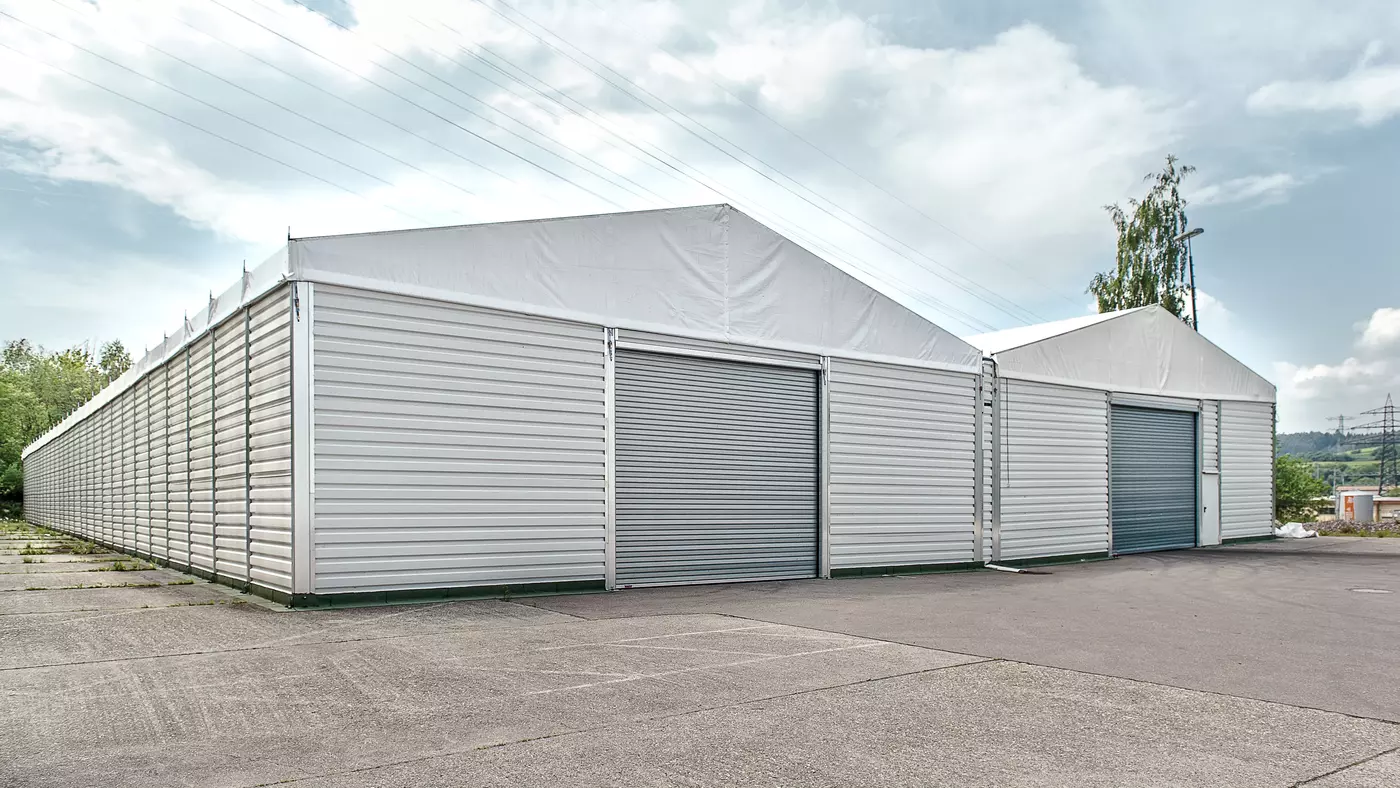
Connected with each other
The double-bayed temporary building forms a spatial unit without disruptive interior walls.
Lots of space gain
2,250 m² of protected storage space under one roof.
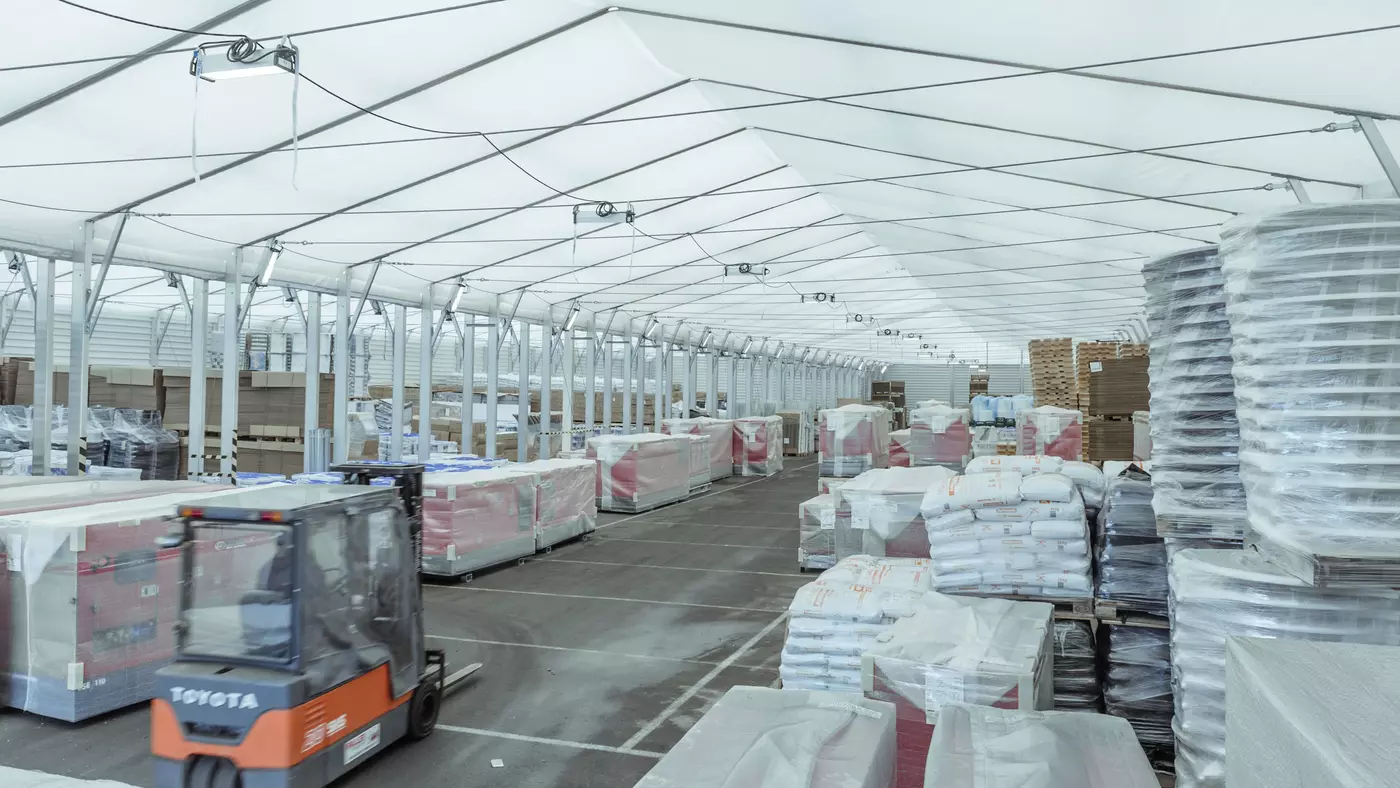
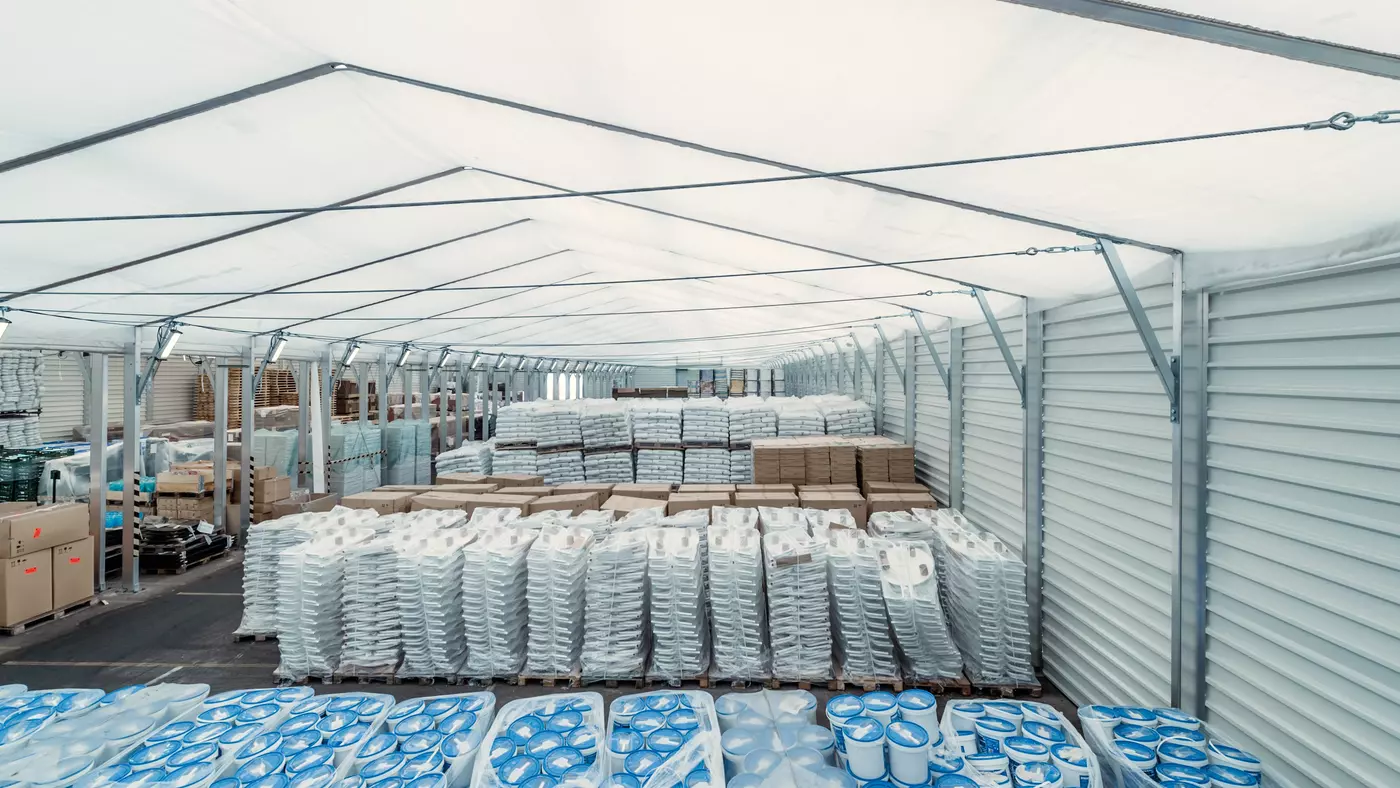
Bright, friendly hall atmosphere
Translucent roof tarpaulins ensure daylight-like conditions and thus save energy costs.
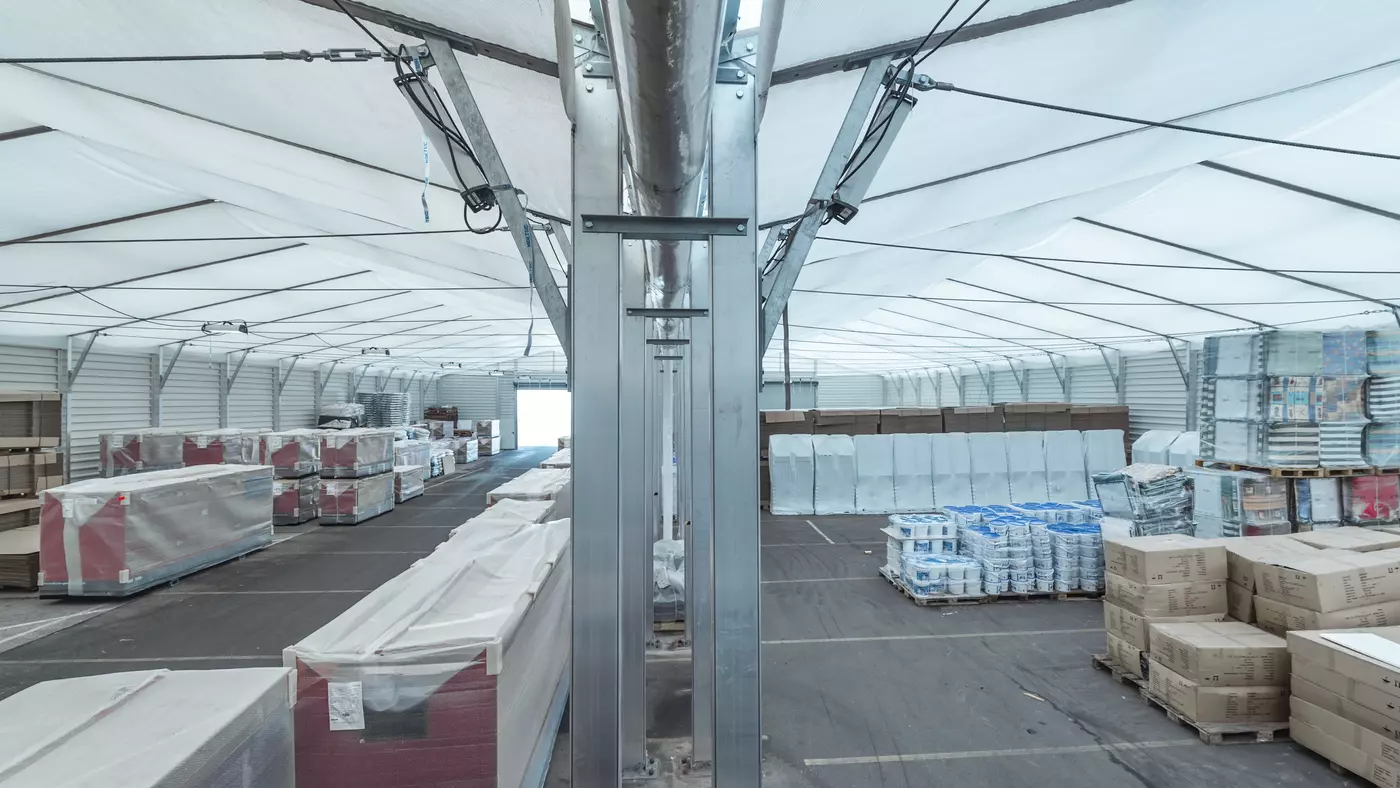
Controlled water drainage
The intermediate gutter connects the roof cladding of the two bays and drains the rainwater in a controlled manner.
Well advised. HALTEC.
Building a hall raises many questions. Our online guide has detailed answers for you.
Find out how you can erect temporary buildings without foundations using soil nails. What you need to consider when obtaining approval for temporary buildings and which types of foundations are suitable if the temporary building is to be anchored with heavy-duty anchors. We also explain how temporary buildings can be moved on rails or attached without anchoring using ballast only.
BASIC Reference 011