

BASIC Reference 136
Industrial tent for a rubber and plastics manufacturer
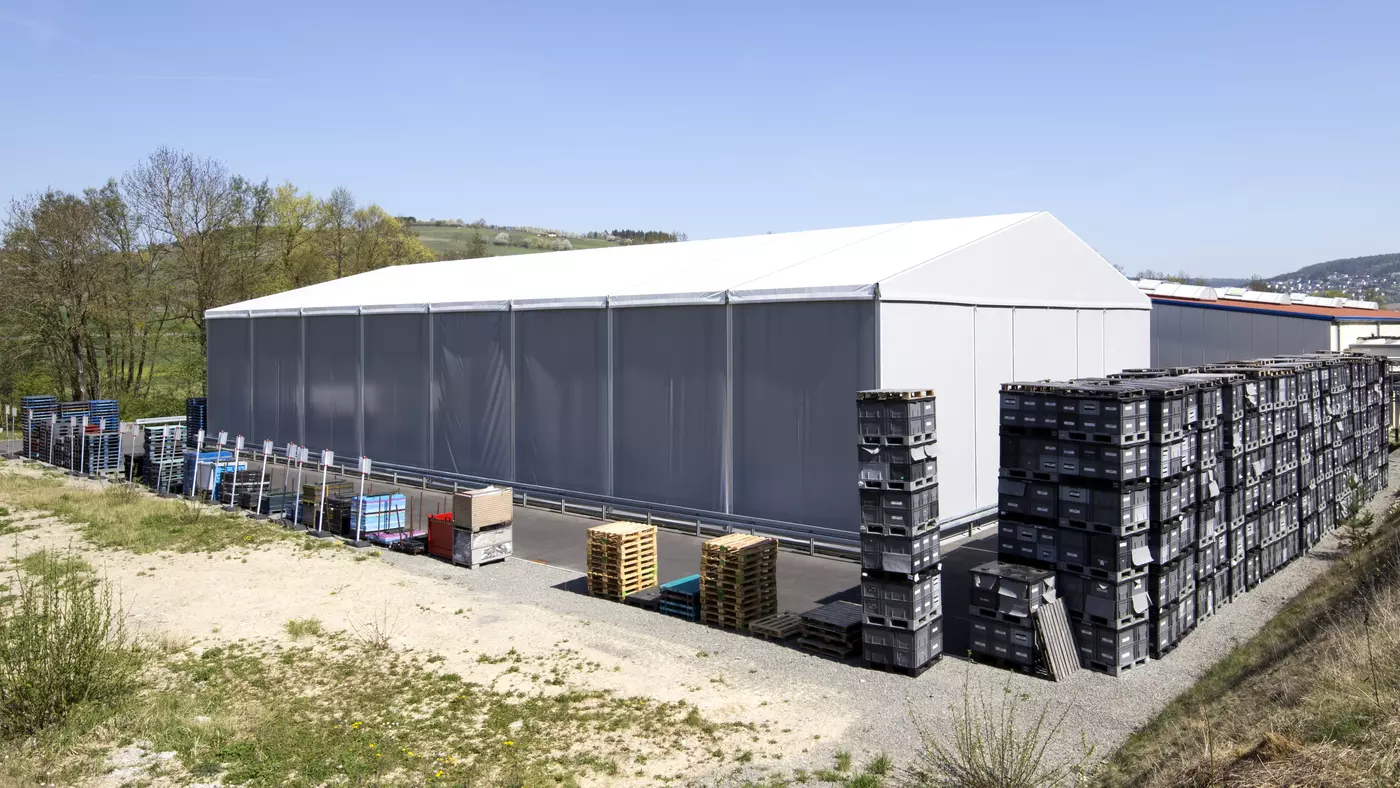
Protection class 3 | condensation-proof. The company from Baden-Württemberg expanded its storage space by a further 800 m² with this industrial tent. With a side height of 7.0 m, this hall offers generous space for storing goods and thus perfectly meets the space requirements of this customer.
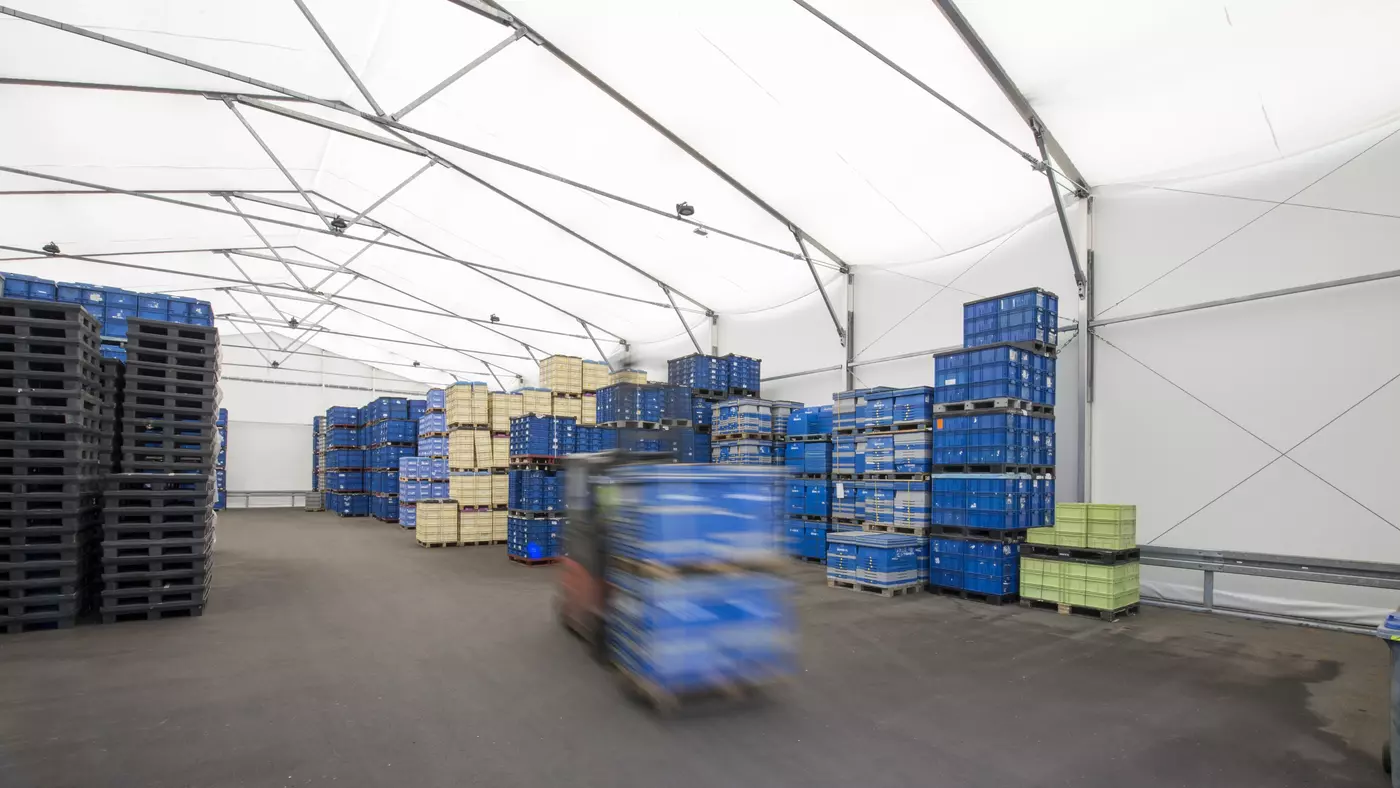
The industrial tent was anchored foundation-free with pegs directly to the existing asphalt surface. The tarpaulin panelling offers simple protection from wind and weather for the finished goods. Retracted interior tarpaulins protect the goods from dripping condensation. As a result, this hall complies with protection class 3 | condensation-protected. In addition, the frost-resistant goods are stored on pallets on the floor.
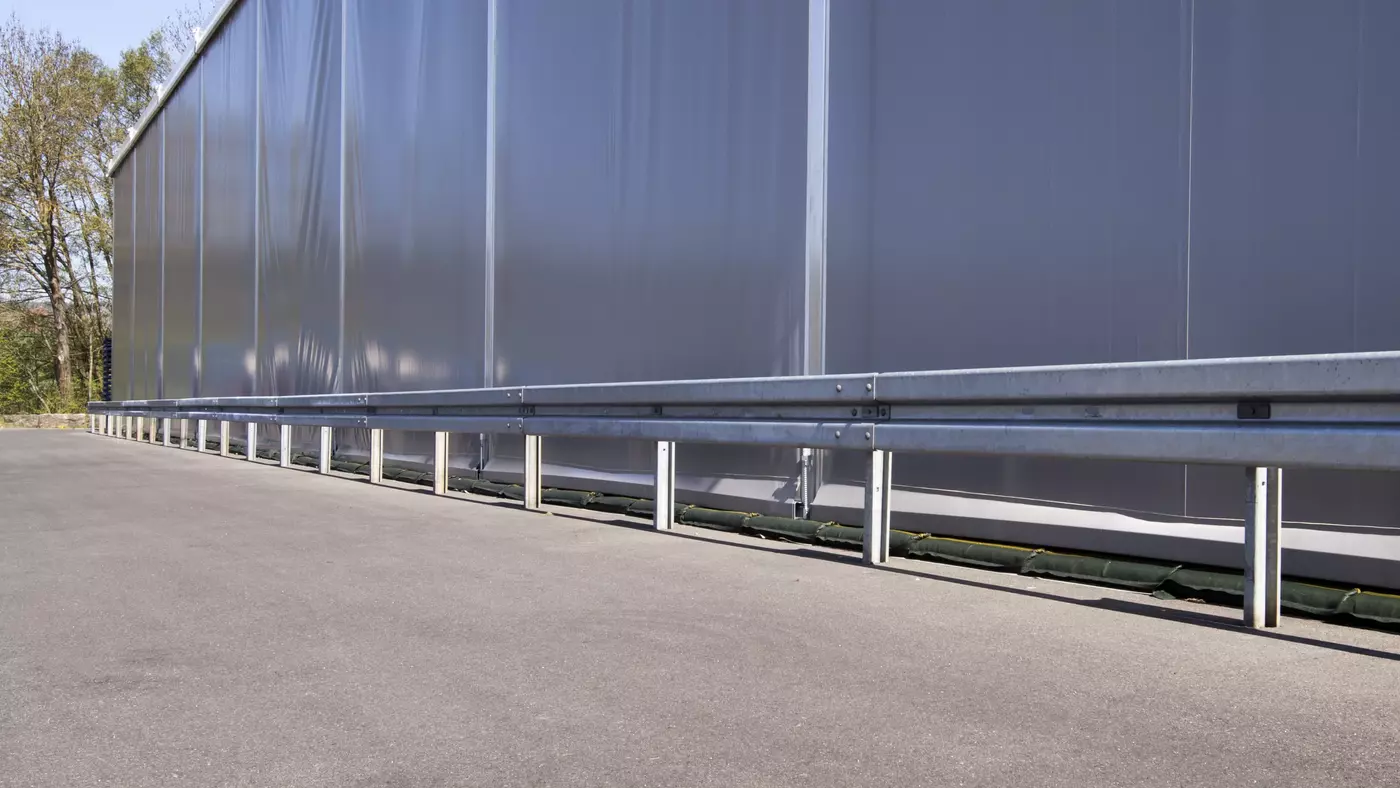
The impact protection inside and outside the industrial tent ensures the necessary safety distance from the hall construction. The crash barrier protects against impact loads from pallet trucks and forklift traffic, for example.
Reference images and details
Additional space gain
A hall size of 800 m² creates additional large storage areas.
Bright atmosphere
Translucent roof tarpaulins ensure daylight-like conditions in the industrial tent and thus save energy costs.
Hall protection
Crash barriers protect the industrial tent from impact loads from forklift trucks and forklift traffic, for example.
Perfectly tensioned
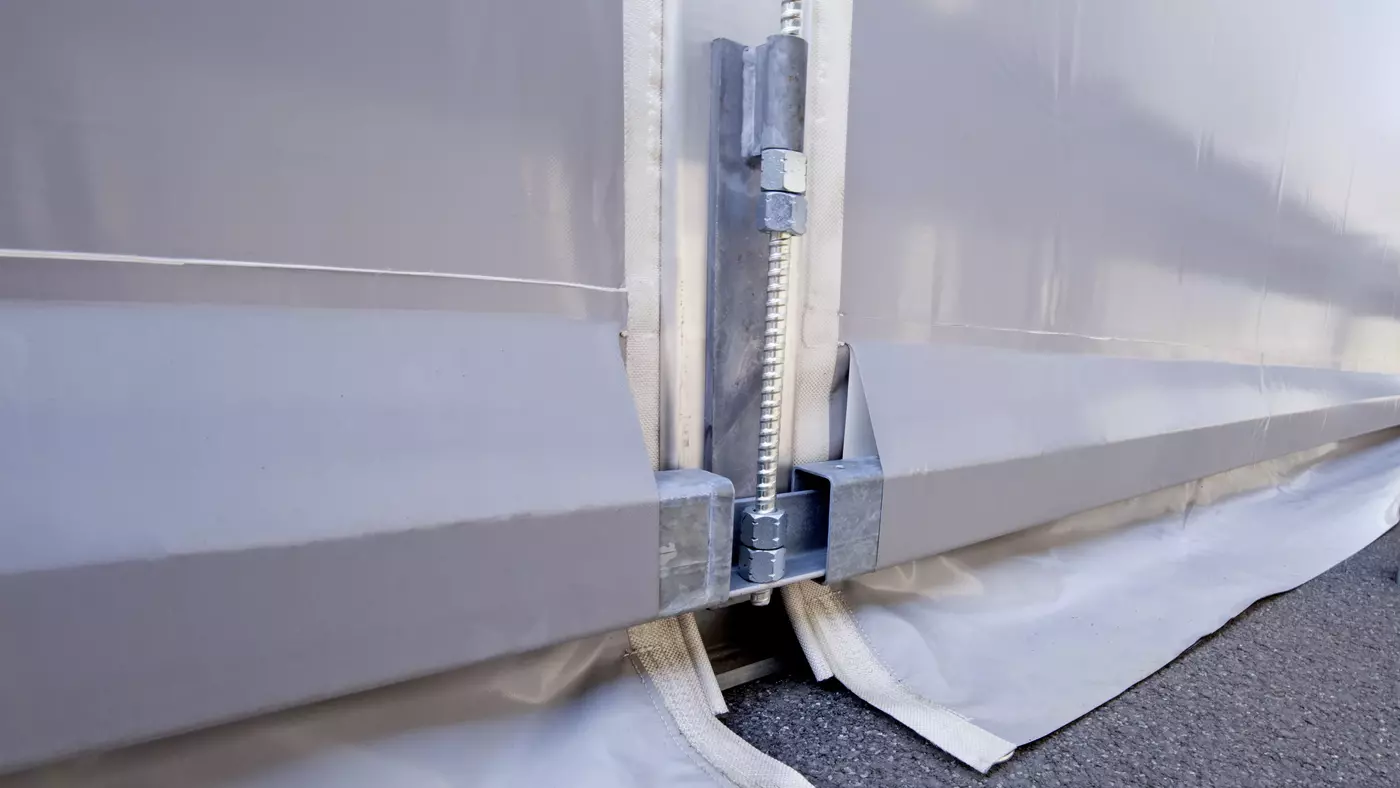
The tarpaulin cladding is braced on the ground using rectangular tubes to prevent water pockets from forming in the roof in heavy rain.
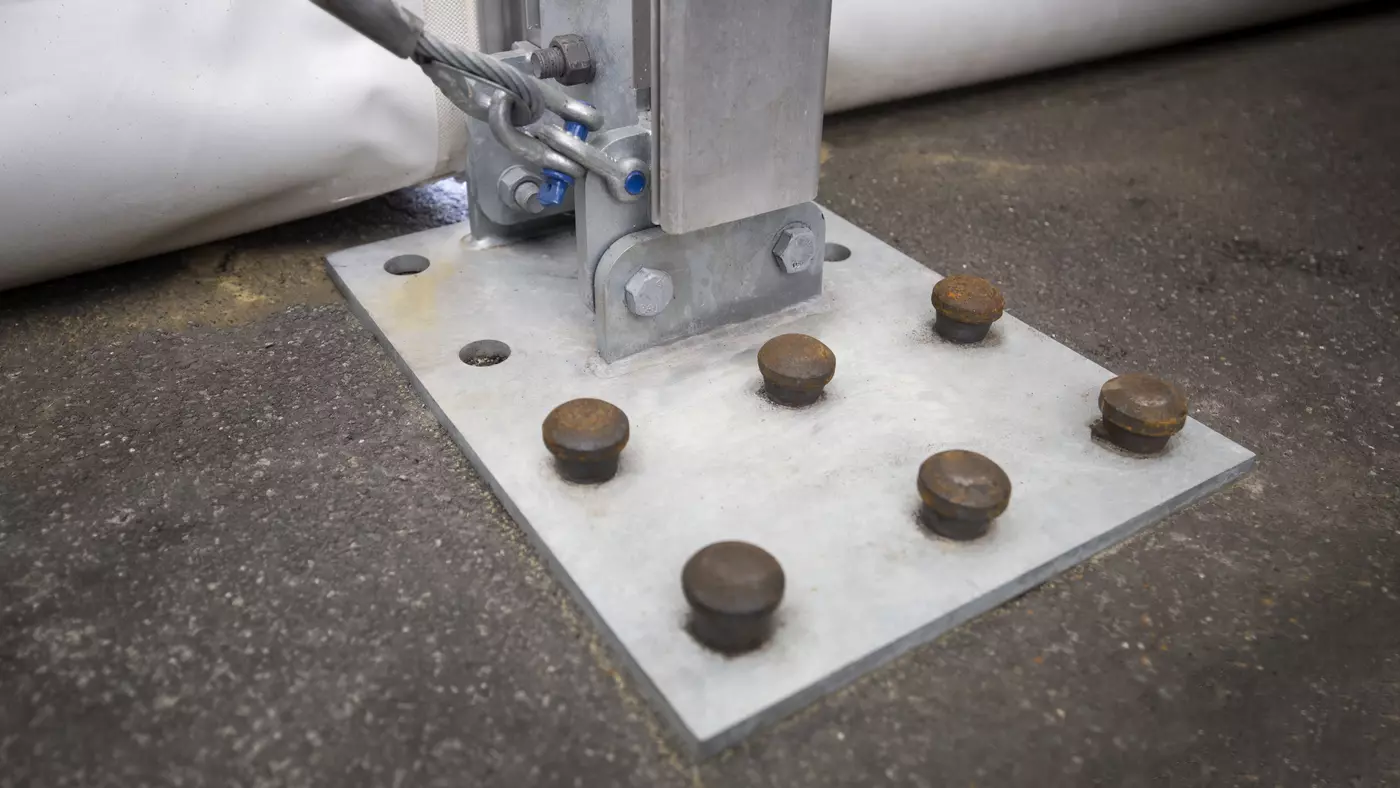
Fast and cost-effective anchoring
The industrial tent is anchored directly to the ground with pegs. This saved this customer costly and time-consuming foundations.
Maintenance-free hall access
The large tarpaulin gate in the gable is maintenance-free and easy to handle. Thanks to its size, lorries can also drive directly into the industrial tent so that they can be loaded in the dry.

Well advised. HALTEC.
Building a hall raises many questions. Our online guide has detailed answers for you.
Find out how you can erect temporary buildings without foundations using soil nails. What you need to consider when obtaining approval for temporary buildings and which types of foundations are suitable if the temporary building is to be anchored with heavy-duty anchors. We also explain how temporary buildings can be moved on rails or attached without anchoring using ballast only.
BASIC Reference 136