

BASIC Reference 202
Storage tents for a gigantic solar project
Protection class 2 | uninsulated. A company from Saxony needed an enormous amount of protected storage space for storing photovoltaic modules. The challenge: almost 20,000 m² of space gain had to be realised in just a few weeks. Thanks to the powerful rental pool, HALTEC was able to master this task with flying colours.
In a former mining region near Leipzig, the company MOVE ON Energy is planning and building one of the largest non-state-subsidised solar parks in Europe. Once completed, the photovoltaic plant will be able to supply around 200,000 households with electricity. The enquiry to HALTEC was particularly urgent. The first halls were to be erected within a very short time to store the photovoltaic modules that would soon be arriving. No sooner said than done - less than five weeks after the initial contact and around three weeks after the order was placed, the first hall was ready to use. The construction of all the halls took just six more weeks - an organisational masterpiece.
Just as much hall as needed
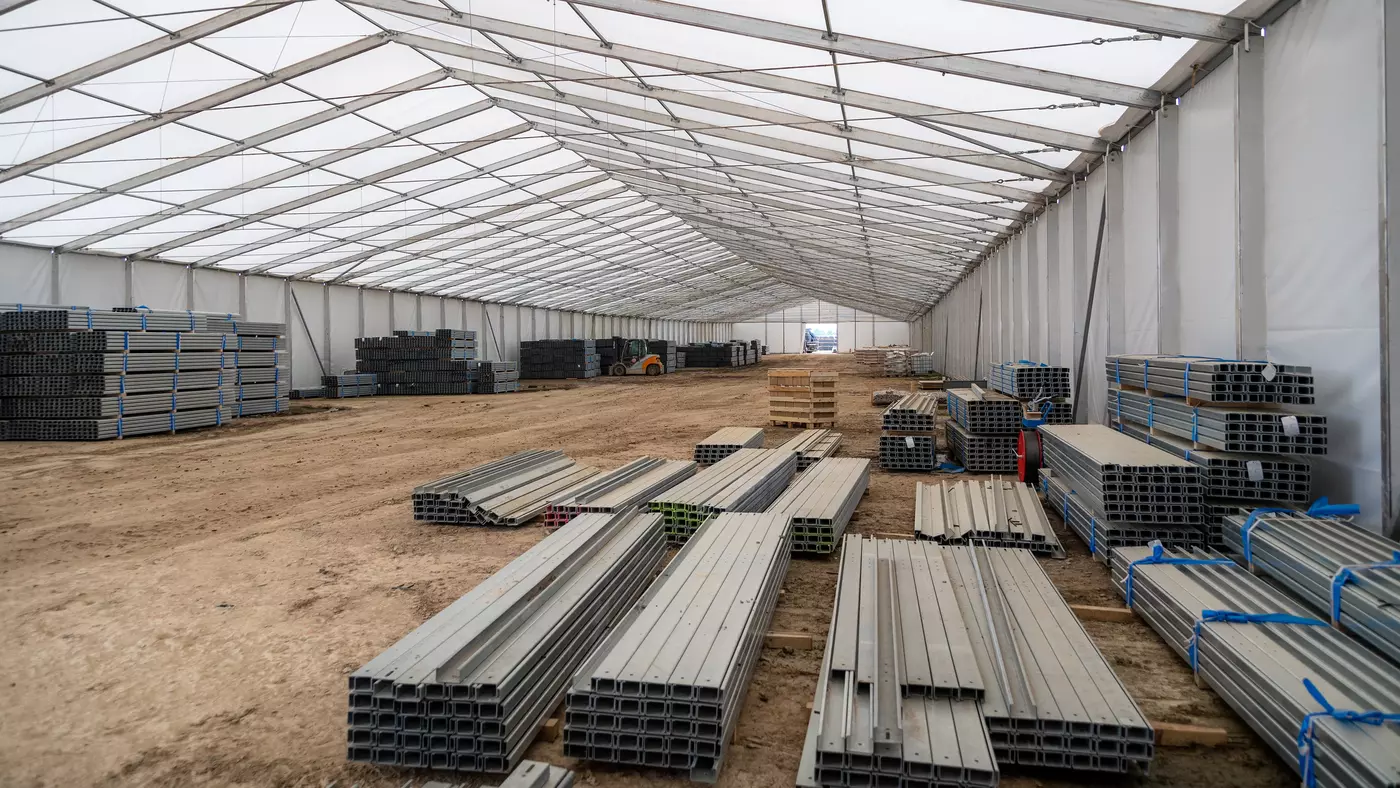
The ten halls are particularly impressive in terms of their price-performance ratio. Without expensive additional equipment, the halls offer exactly the benefits that the customer needs: efficient and well-protected storage space. The halls were designed with PVC tarpaulins or trapezoidal sheet metal as wall cladding. Translucent roof tarpaulins allow sufficient daylight into the hall interior at all times. Additional lighting is not needed. The rented halls are therefore just right for the intended purpose, the protected warehousing of temperature-insensitive goods.
No foundations required
To ensure that the area could also be used as a sustainable photovoltaic area after the project was completed, foundations were out of the question. The halls therefore had to be anchored to the ground with pegs. In order to be able to install all the halls on the existing arable land, the soil had to be compacted on-site. A ground peg pull test confirmed the load-bearing and tensile strength of the ground prior to assembly. This means that nothing stands in the way of the halls being dismantled without leaving any residue at the end of the rental period.
The sizes of all halls at a glance (width x length x side height):
- Warehouse 1: 20.00 x 100.00 x 5.00 m
- Warehouse 2: 20.00 x 100.00 x 4.40 m
- Warehouse 3: 25.00 x 135.00 x 4.40 m
- Warehouse 4: 20.00 x 100.00 x 3.50 m
- Warehouse 5: 15.00 x 100.00 x 4.40 m
- Warehouse 6: 15.00 x 100.00 x 3.50 m
- Warehouse 7: 15.00 x 100.00 x 3.50 m
- Warehouse 8: 20.00 x 100.00 x 4.40 m
- Warehouse 9: 20.00 x 100.00 x 4.40 m
- Warehouse 10: 15.00 x 50.00 x 3.50 m
Reference images and details
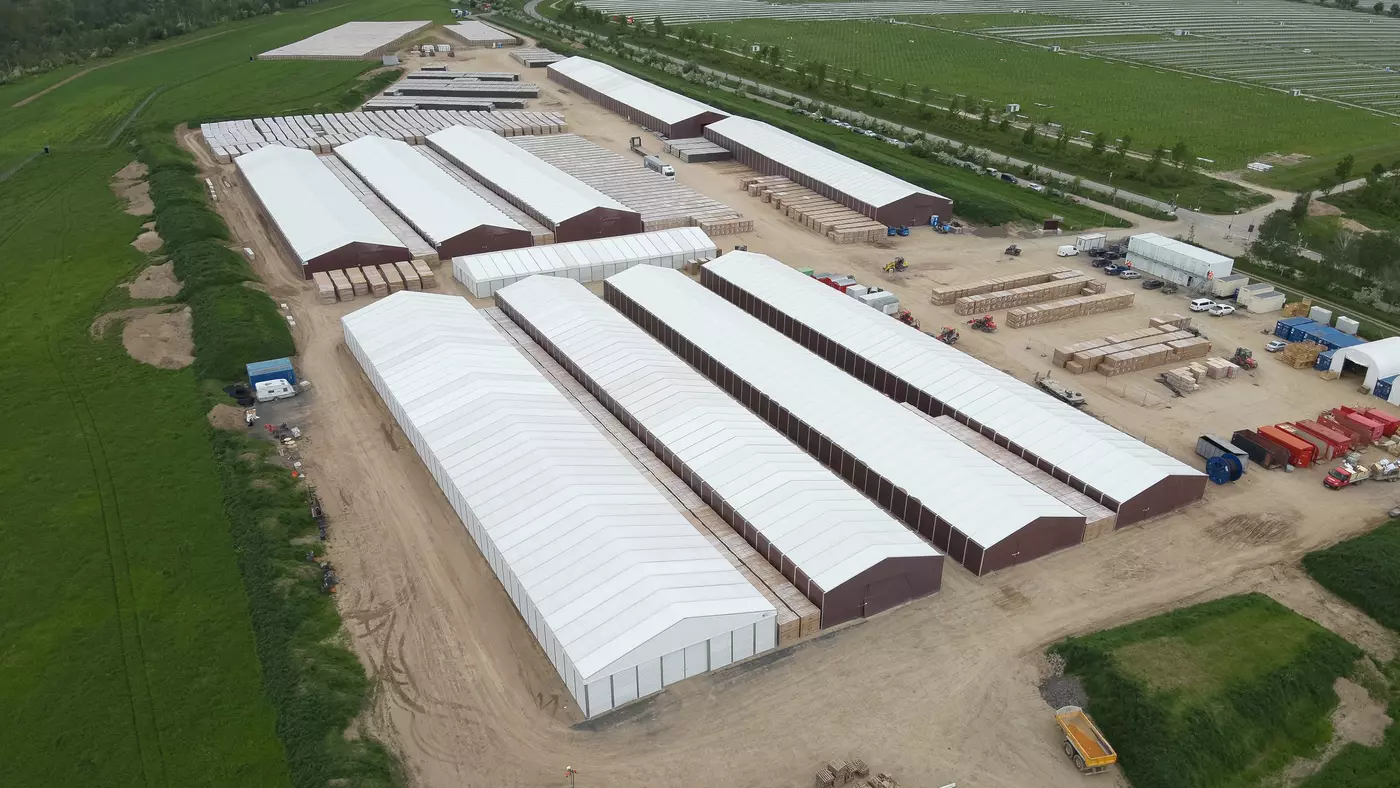
Enormous space gain
With a total of ten HALTEC BASIC temporary buildings, an incredible storage area of almost 20,000 m² has been created.
Daylight-like conditions
Thanks to the translucent roof tarpaulins, sufficient daylight enters the halls at all times so that work can be carried out without additional lighting.
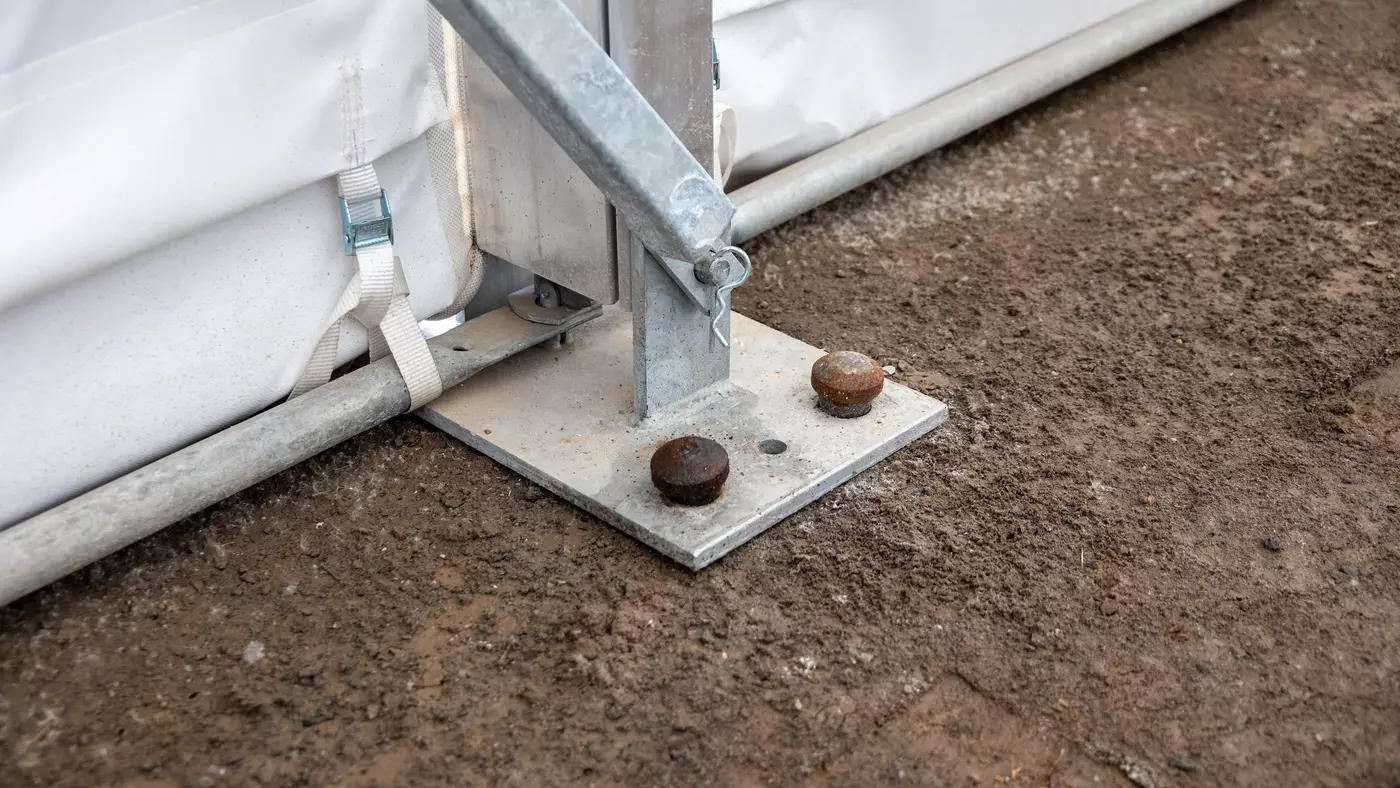
Foundation-free anchoring
Thanks to the use of ground pegs, the halls could be assembled cost-effectively without foundations. Quick and residue-free dismantling is also guaranteed.
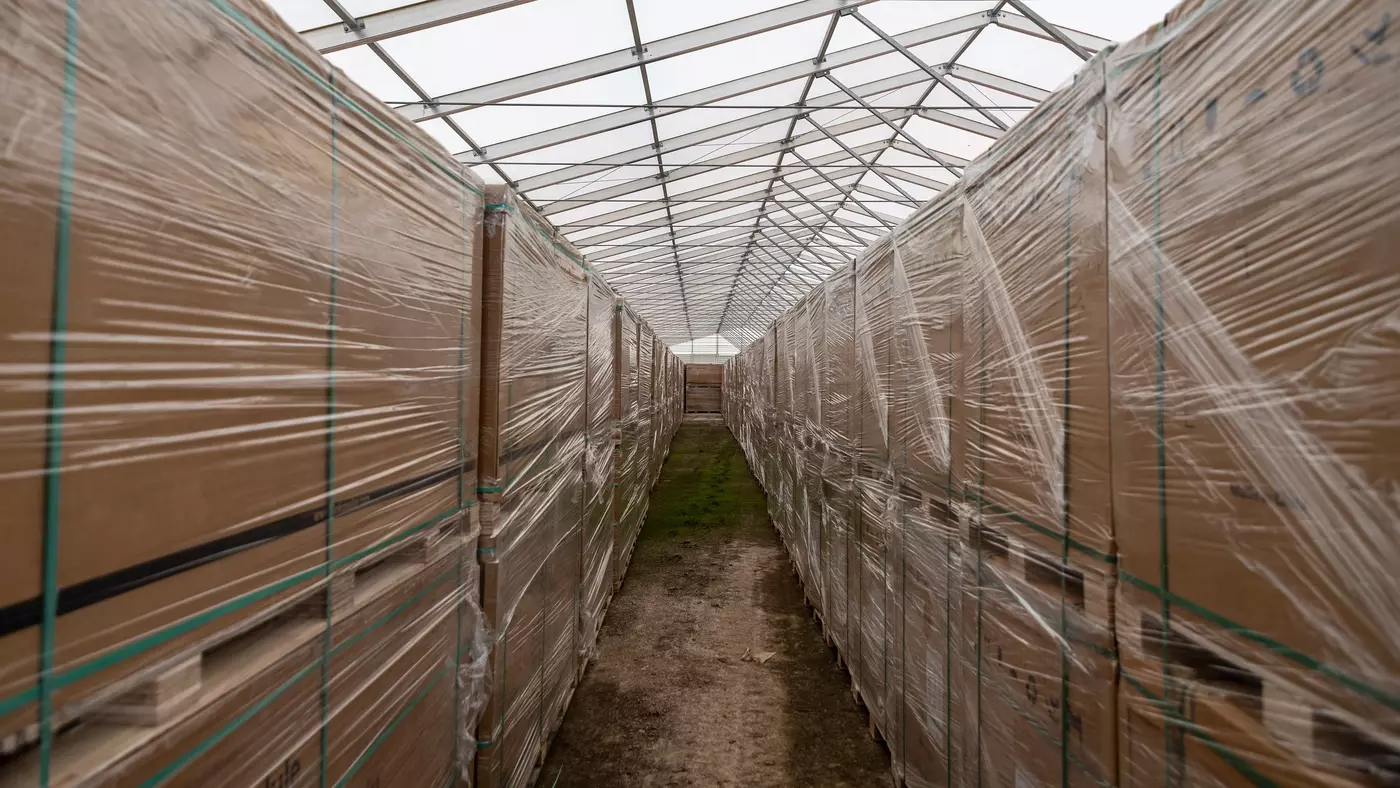
Plenty of storage space
The HALTEC BASIC temporary buildings easily accommodate the photovoltaic modules and can be stored and retrieved very easily.

Easy access to the hall
Maintenance-free tarpaulin and trapezoidal sliding gates allow easy access to the warehouses.
Well advised. HALTEC.
Building a hall raises many questions. Our online guide has detailed answers for you.
Find out how you can erect temporary buildings without foundations using soil nails. What you need to consider when obtaining approval for temporary buildings and which types of foundations are suitable if the temporary building is to be anchored with heavy-duty anchors. We also explain how temporary buildings can be moved on rails or attached without anchoring using ballast only.
BASIC Reference 202