

BASIC Reference 081
Temporary building for canopying agricultural equipment
Protection class 3 | condensation-protected. This hall for an agricultural business in Hesse was designed to fulfil two purposes at once. In addition to canopying agricultural equipment, the hall was also to be used for occasional lunging in the dry.
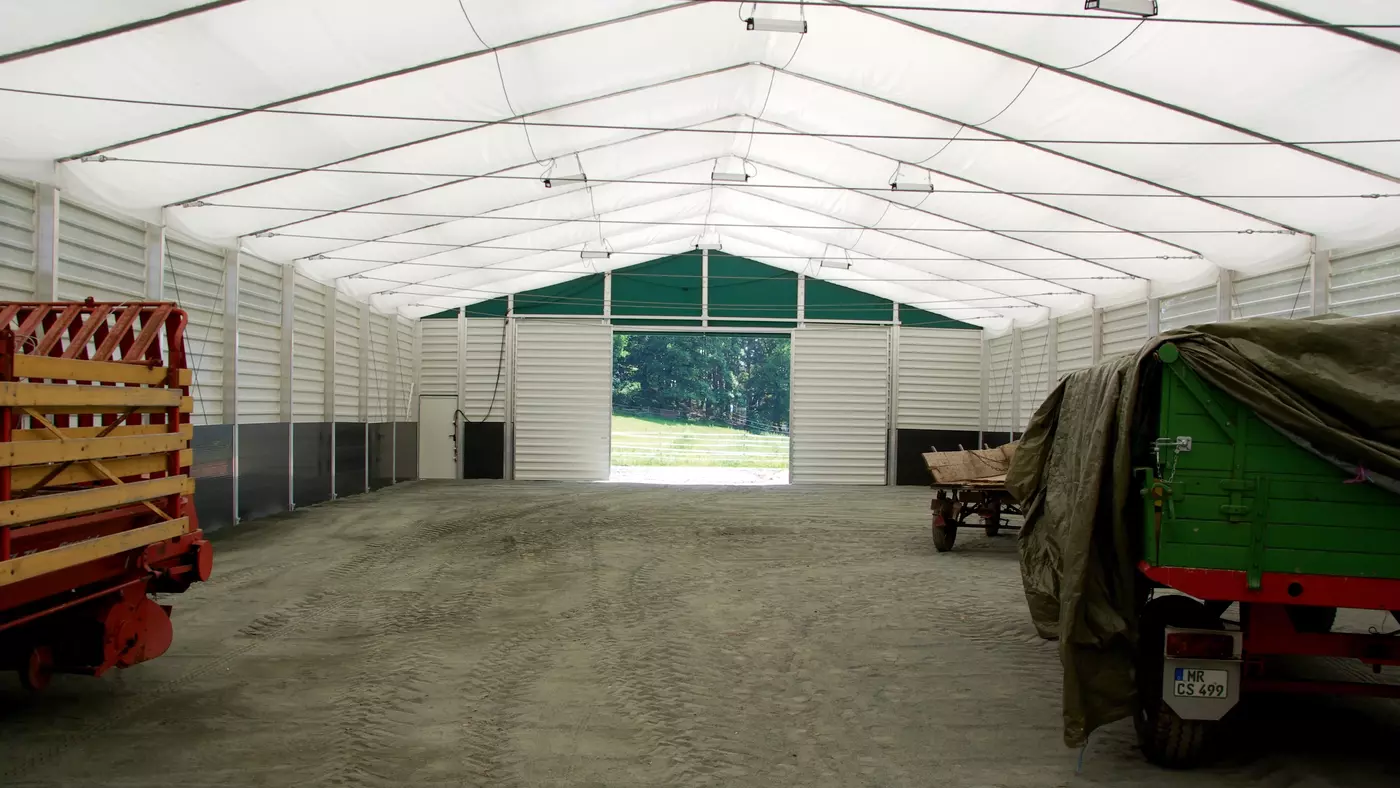
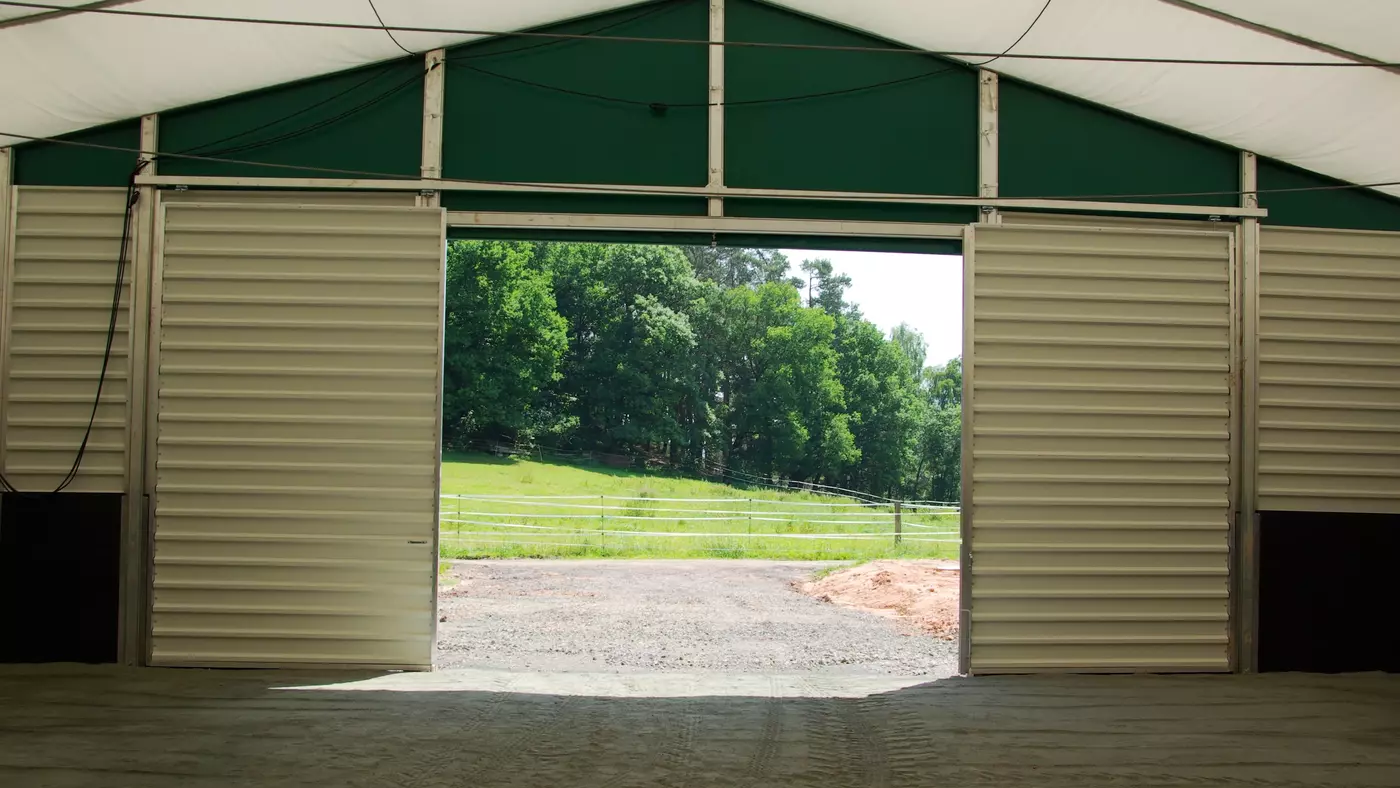
The HALTEC BASIC temporary building with interior tarpaulins to protect against condensation offers plenty of space for canopying agricultural machinery. Thanks to the eaves height of 4.40 m, the doors are large enough to allow tractors and other large equipment to enter the hall.
The translucent roof tarpaulins allow plenty of daylight into the hall. This means that no artificial light is required during the day, thus saving electricity. Special horse riding barriers were also installed to protect horses and riders. These also serve as collision protection when manoeuvring vehicles. A special highlight: the perforated trapezoidal profiles in the side walls. This ensures sufficient ventilation at all times.
Reference images and details
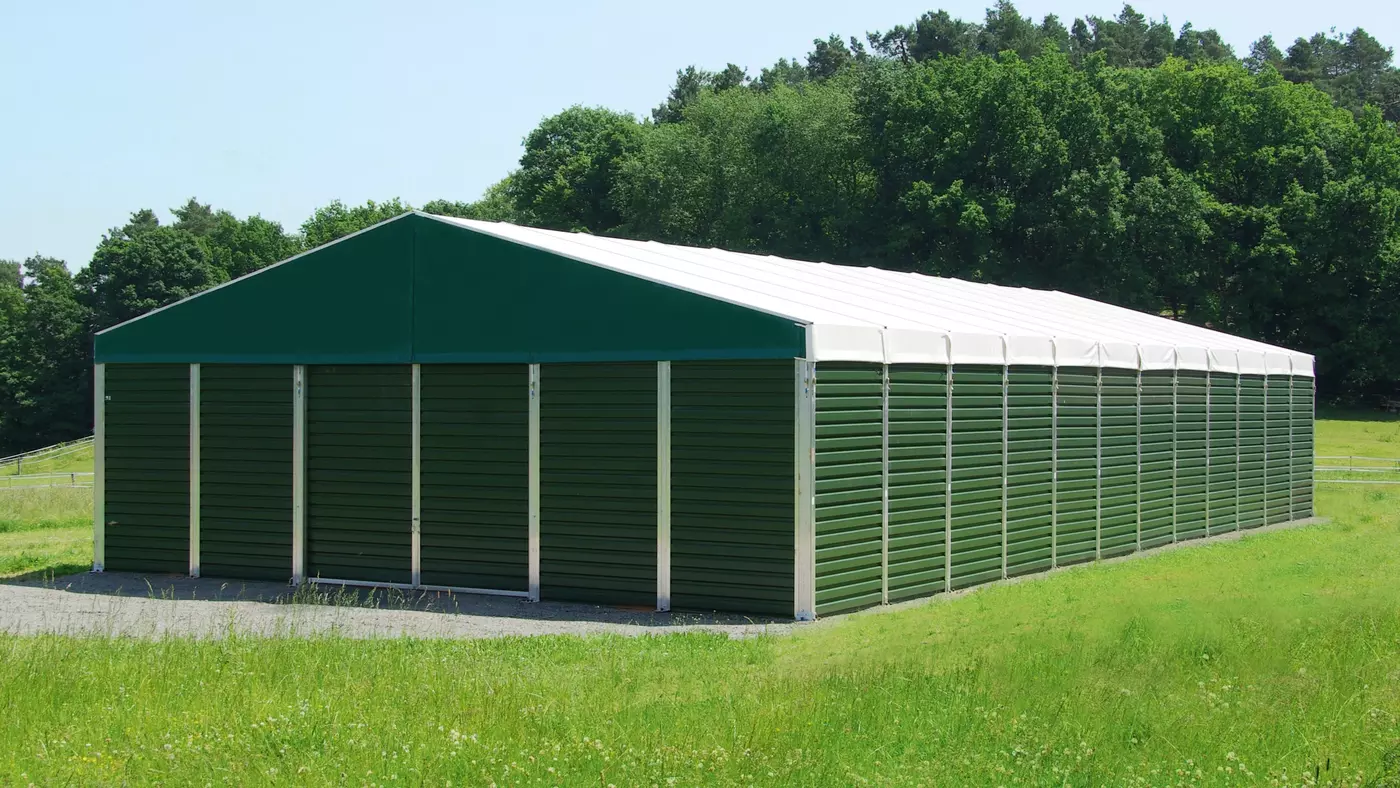
Perfectly embedded in the landscape
With the moss green trapezoidal profiles in RAL 6005, the shelter blends in perfectly with the landscape.
Bright and energy-saving
White roof tarpaulins allow daylight into the interior. This saves energy as there is no need for artificial light during the day.
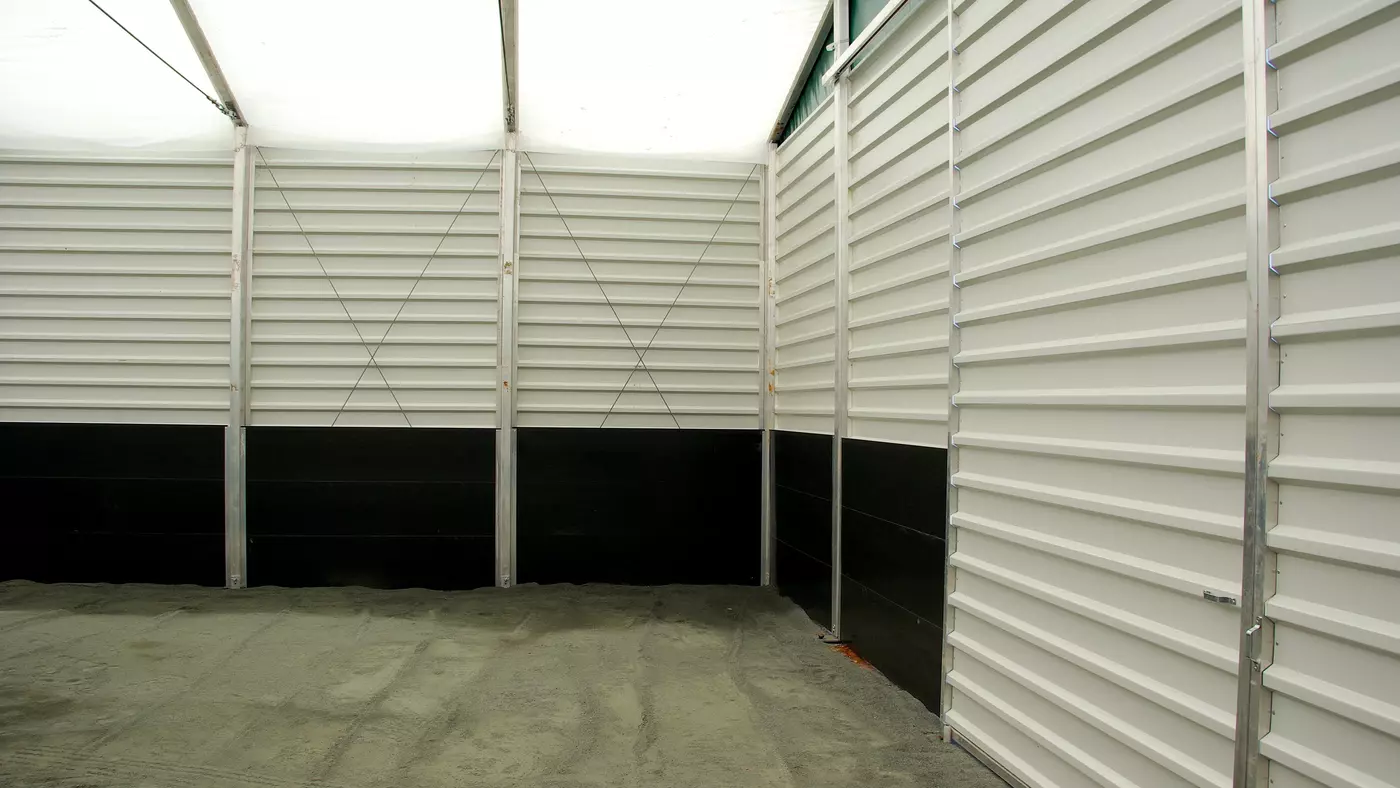
Protection for animals and humans
The riding barrier protects horses and people. It also serves as collision protection when manoeuvring inside.
Easy access to the hall
The large, maintenance-free sliding door means that even large vehicles can easily drive into the hall.
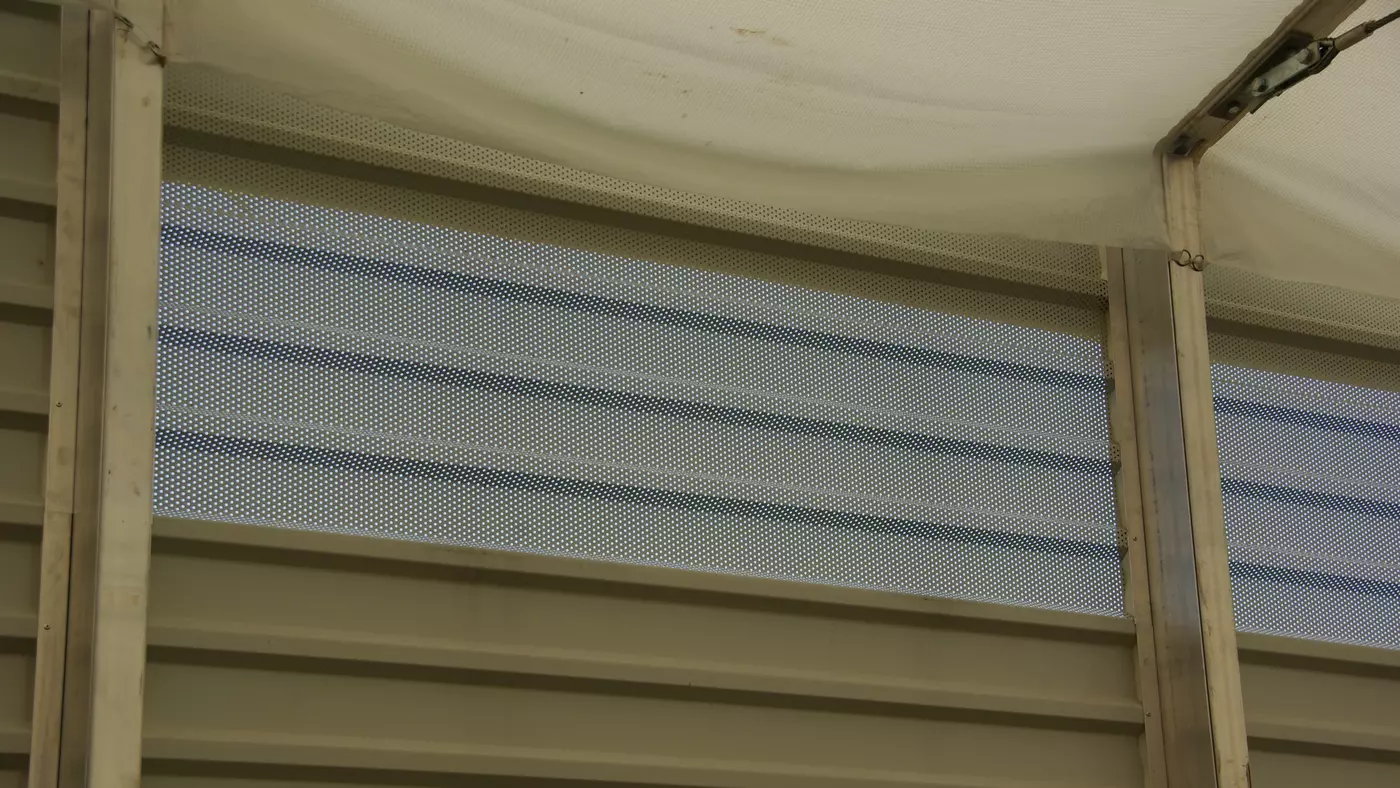
Efficient ventilation
The perforated trapezoidal sheet metal in the side wall ensures that the hall is permanently ventilated.
Well advised. HALTEC.
Building a hall raises many questions. Our online guide has detailed answers for you.
Find out how you can erect temporary buildings without foundations using soil nails. What you need to consider when obtaining approval for temporary buildings and which types of foundations are suitable if the temporary building is to be anchored with heavy-duty anchors. We also explain how temporary buildings can be moved on rails or attached without anchoring using ballast only.
BASIC Reference 081